How Long Does It Take For A Baby To Learn To Walk?
Decoding the timeline of first steps, from the first wobble to the full sprint.
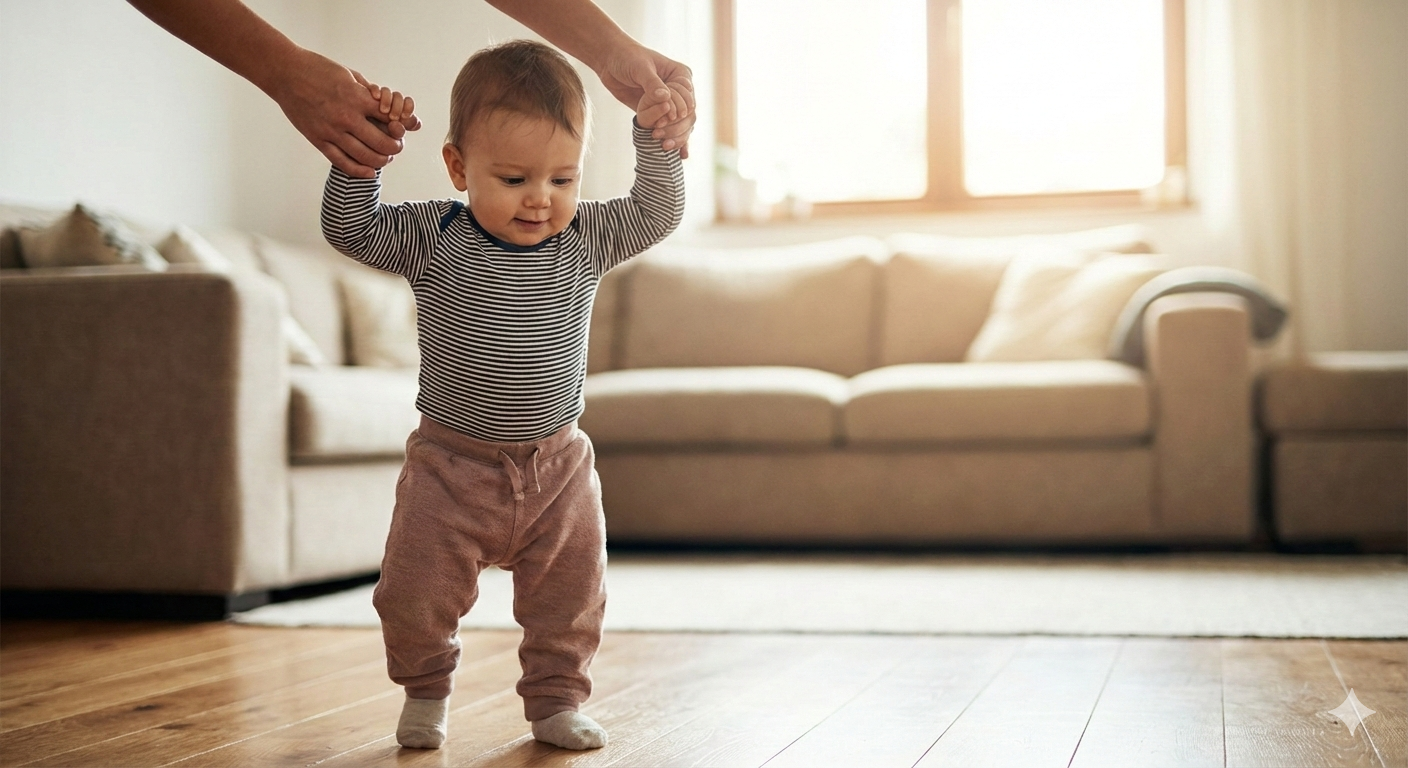
It is perhaps the most anticipated moment in the first year of parenthood: the first step. It marks the transition from a stationary observer to an active explorer.
However, the question "How long does it take?" is deceptive. Walking isn't a single event; it is the culmination of a year-long process of muscle strengthening, balance coordination, and confidence building. While the average age for taking those first independent steps is around 12 months, the "normal" range is incredibly broad, spanning anywhere from 9 to 18 months.
This guide dives deep into the biology of walking, the month-by-month progression, and how you can support your little one's journey toward vertical independence.
1. The Timeline: A Marathon, Not a Sprint
To understand how long it takes, we must look at the foundation. Walking requires the mastery of several gross motor skills first. If you view walking as the final exam, the months leading up to it are the study sessions.
Phase 1: The Core Foundation (4-6 Months)
Before legs can work, the spine must be stable. During this period, babies are learning to sit up with support and eventually without it. This strengthens the core muscles and the lower back, which are essential for maintaining an upright posture later on. If your baby is struggling to sit up by 9 months, this is often the first indicator that walking may happen later on the timeline.
Phase 2: Vertical Awareness (7-10 Months)
This is when the concept of "up" becomes fascinating. You will notice your baby attempting to pull themselves up on furniture, crib rails, or your legs. This "pull-to-stand" phase is critical it is the first time the legs bear the full weight of the body. They may stand for a few seconds, wobble, and plop down (which also teaches them the vital skill of how to fall safely).
Phase 3: The Cruise Control (9-12 Months)
Cruising is the act of walking while holding onto furniture. A baby will shuffle along the length of a sofa or coffee table. This is the final practice round. Cruising teaches weight shifting the ability to transfer weight from one foot to the other while maintaining balance. This lateral movement is the direct precursor to forward movement.
"Milestone Myth: Many parents believe crawling is a prerequisite for walking. It isn't! Some babies skip crawling entirely, opting to 'bottom shuffle' or go straight from sitting to pulling up. As long as they are coordinating both sides of their body, the method of movement matters less than the movement itself."
2. The Psychological Factor: Confidence
Why do some babies walk at 9 months and others at 15? Often, it is not a matter of muscle, but of temperament. Walking requires a leap of faith. It involves letting go of the safety of the sofa and stepping into empty space.
- The Daredevils: Impulsive babies may walk earlier because they are less afraid of falling. They might take steps sooner but may also sustain more minor bumps and bruises.
- The Observers: Cautious babies may cruise for months, refusing to let go until they are 100% certain they won't fall. When these babies finally walk, they often do so with surprising stability because they waited until their balance was perfected.
3. How to Encourage the Process
You cannot force a baby to walk, but you can create an environment that invites it. Here are the best, evidence-based ways to facilitate the process:
Go Barefoot
The best shoes for learning to walk are no shoes at all. Babies rely on sensory input from the soles of their feet to adjust their balance and grip the floor. Rigid shoes can dull this sensory feedback and make balancing harder. Keep them barefoot or in non-slip socks while indoors.
The "Furniture Highway"
Arrange your living room furniture so that the gaps between stable objects are small. If a baby can easily reach from the sofa to the ottoman, they are more likely to attempt a transfer. As they get more confident, you can slowly widen the gap, encouraging that terrifying, thrilling unsupported step.
Ditch the Baby Walker
This is controversial but important: The American Academy of Pediatrics (AAP) actually advises against seated baby walkers (the plastic saucers with wheels). Contrary to popular belief, they do not help babies learn to walk. In fact, they can delay the process by allowing babies to move without engaging their core or learning proper balance. Instead, opt for push toys (like a sturdy wagon) that the child stands behind and pushes.
4. When Should You Worry?
It is easy to panic when your friend's child is sprinting at a birthday party while yours is happily crawling. However, the range of "normal" is vast.
Medical experts generally suggest consulting a pediatrician if:
- The child is not walking at all by 18 months.
- The child walks exclusively on their toes (toe-walking) after the initial learning phase.
- There is a significant asymmetry in their legs (using one leg significantly more than the other).
- They seem unusually stiff or unusually floppy (low muscle tone).
Remember that premature babies often reach milestones based on their adjusted age, not their chronological age. A baby born two months early may not walk until 16 or 17 months, which is developmentally appropriate for them.
5. The "Toddler" Transition
Once those first steps are taken, the learning isn't over. The first few months of walking are characterized by the "toddler gait" legs wide apart, elbows held high for balance (the "high guard" position), and a rocking motion. It takes roughly 3 to 6 months of practice after the first steps for a child to lower their arms, narrow their stance, and walk with a heel-to-toe motion.
So, how long does it take to learn to walk? Biologically, about a year. Functionally, about 15 months. But for the parents watching their little one wobble across the kitchen floor, it feels like the blink of an eye.
Ready for the Next Step?
Whether they are crawling or sprinting, find a name that matches their energy.